What Are Custom Labels? A Guide To Branding & Marketing
 Autumn Phillips
 4 min read
 Jul 13, 2026
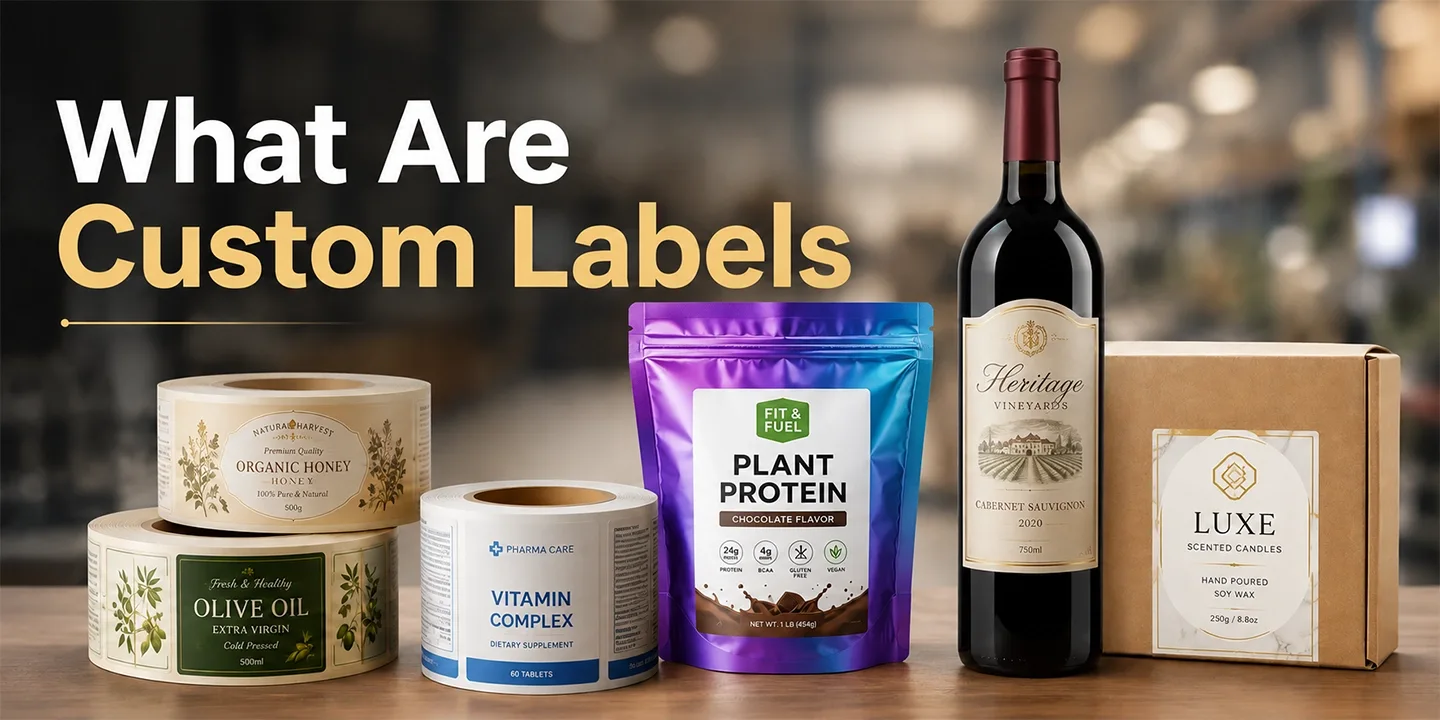
Custom labels/tags are marketing tools that inform customers what a product is and what it does. It is a piece of self-adhesive plastic and a paper tag that you can find in rolls and sheets. They display product information, regulatory legal text, and instructions. These are the reasons what makes them differ from stickers.
Whether it’s for home items, clothing, or shipping. Each label specifies branding, informational, and advertising purposes. They are made from vinyl, paper, or BOPP materials that are laminated with various finishes for long-lasting stickiness.
It does all the heavy lifting for your business. These tags help brands transform their packaging into a retail-ready manner to stand out on shelves. In fact, they can change their mind before a purchase! Let us break down everything from types to how they are made.
What Is The Role Of Custom Labels In Branding?
A good label can stop anyone at the spot. It is what everyone reads from the labels about the product description. Whether it’s a jar on the shelf, a shipping box, or a tag on a piece of clothing, labels are doing the work. It makes the brand much easier to remember, trustworthy, and sets it apart from the competitors.
So, industries from food, cosmetics, and pharmaceuticals want to give their consumers the full transparency of their products. Brands want to build customers’ trust and give them labels that make them avoid hidden allergens, check for claims, and understand what they are buying. What better way to make it convenient for them than to include barcodes, QR codes, and earning messages?
Custom Label Formats vs. Label Types: What’s The Difference?
Before you order labels, you need to understand the distinction between a label format and type. The type is the function of a label, and format refers to a specific design or visual layout.
The formats include:
- Single Labels: They are pre-cut pieces in different sizes, used for name badges, hand-written tags, or unique brands.
- Label Sheets: Multiple labels printed on a single sheet, which is easy to store and use for shipping, home, offices, and crafts.
- Label Rolls: Wound around a cardboard core in a roll stock, perfect for high-volume production.
- Fan-Fold Labels: Thermal labels that come in a continuous sheet of labels folded in a zigzag or accordion-like pattern.
And the types of custom labels are given as such:
- Clear Labels: Blends with the product surface and creates a no-label look, best for glass, plastic, and premium packaging.
- Waterproof Labels: They can withstand water, oil, and humidity, and are best for jars, bottles, and bath products.
- Foil Labels: These eye-catching labels are coated with a metallic coating (gold, silver, colored, neon).
- Window Labels: Brands use them on their glass windows and doors to emphasize their branding, promotion, and business information.
- Security Labels: Products, such as medicines, electronics, and cosmetics, require tamper-evident labels to protect them from unauthorized opening.
- Barcode Labels: These printed labels can be scanned to access inventory, pricing, tracking, and retail operations of the item.
- QR Code Labels: Customers can scan these labels from clothing, food items, and wine bottles, and they can access the website, promotion, and instructions.
- Promotional Labels: Brands use these labels to highlight special offers, discounts, limited editions, and their new arrivals.
Top Used Materials In Label Production
In the product industry, custom labels are required to follow certain regulations set by the FDA(for food and cosmetics), CPSC (consumer goods), USDA (food like meat & poultry), and FTC (apparel and textiles). That is why each industry utilizes certain materials to create its custom labels:
Metallic Foil Label
These premium and reflective metallic foil labels are made from metalized paper or silver film. Brands can choose to add different finishes to them in gold, silver, copper, and holographic. They are highly durable and resistant to moisture and most handling damage.
Polycarbonate Label
Industrial experts use this material for its unmatched flexibility and durability on different types of manufacturing equipment labeling. These are made from high-impact thermoplastic graphics that don’t yellow, crack, or delaminate under sun exposure.
Polyester Label
It is a tank. This material can handle extreme heat, cold, UV, chemicals, and abrasion. They can withstand 3-5+years in the outdoors (10 years when laminated!). Labels like these are used for tracking, electronics, and manufacturing equipment.
Vinyl Label
They are available in white, clear, and metallic. Brands can use permanent adhesive labels that last the longest. Others, like the removable ones, don’t leave any residue behind and are used by brands too. These are tear-resistant and give a high-end look.
BOPP Label
The most durable material that you can use for food packaging, beauty products, and beyond. They can endure temperatures from -40°C to +120°C (-40°F to +248°F). It is very flexible on various curved and flat surfaces without getting wrinkled.
Paper Label
They are a permanent label that sticks to clothing, spice jars, and personalized wine bottles. With this, the packaging cost drops by 25% in some applications.
White Labels
Different industries purchase these plain white labels from manufacturers with their own customizations (logo, design, style, etc). It allows companies to expand their product lines, can be produced in high quality, and saves a lot of money.
Holographic Labels
These labels are embossed so thin (around 10 microns, about 1/5th of a human hair), which gives them their iridescent effect. They make the product look premium with its metallic and vibrant effect that shines from the retail shelves.
Glitter Labels
They are waterproof, textured adhesive tags that are used by children, teens, and adults all the same. It protects your design from water, scratches, oil, and fading. Brands can get eco-friendly and premium ones in sheets as well.
There are various other materials that you can utilize in your label production. If you are looking for the best and most durable materials, then consider LabelPouches services.
Variation Of Custom Label: Adhesives, Finishes, & Printing Methods
These are the things brands can learn from to enhance the presence of their branded labels:
Adhesive Types
- Permanent Adhesive: If you attempt to remove the label, it may cause damage to the label.
- Removable Adhesive: Peels off cleanly and removes residue.
- High-tack Adhesive: Use to adhere to more difficult surfaces such as grease, dirt, oil, or highly textured surfaces.
Protective Finishes
These safeguards prevent the print of the labels from peeling or fading out, and help to increase their visibility for an extended period of time;
- Gloss: Transparent layers will cover the label to enhance vibrancy.
- Matte: Prevent water damage and fading with glare-free and velvety texture.
- UV Laminate: Thick plastic film protects labels from chemicals, the sun, and scratches.
- Soft-Touch Lamination: Brands use this thin, ultra-matte plastic film finish for a distinct peach-skin feel.
Commercial Label Printing Methods
These are the best printing techniques brands should consider for professional and visually stunning labels:
Digital printing
Crisp images with all elements of the label clearly readable, with short-run solutions
Flexographic printing
High speed and inexpensive for long print runs to produce 1000's of industrial units of a single type label.
Offset printing
Delivers consistent, accurate colors on longer print runs that typically suit premium packaged consumer goods and more complex labels.
Thermal printing
Used on label machines, with printing typically on thermal roll feed labels - a reliable standard with thermal printing for shipping and barcoding requirements.
Screen printing
Opaque ink to produce vibrant results on many surface materials, this suits textiles, glass, and heavily used equipment.
Where Are Custom Labels Used?
Custom labels can be customized by: the material used; the dimensions; the shape; and the artwork design:
Packaging for Products and Branding
Custom labels can be placed on the bottles, jars, boxes, pouches, etc. The purpose is to reveal your company’s logo, colours, and other product information, and make the items obvious for the information they carry.
For example: vinyl or paper self-adhesive labels
Retail and Marketing
Businesses can use personalized labels to effectively present and showcase their goods, fully loaded with relevant information on pricing, ingredients, and product usage.
For Example: Security/Tamper-Evident Labels, Sale/Promo Labels, Promotional Labels
Logistics & Warehousing
For your packaged goods, label tracks warehouses and shipping management. These custom labels contain routing codes, barcode tracking, handling, and safety instructions for the logistics.
For Example: Thermal Transfer Labels or Direct Thermal Labels
Apparel & Textiles
Labels for them make it easier for customers to understand proper care instructions and comply with legal warning rules. They include brand print, heat press, and barcodes.
For Example: Barcode clothing labels, heat-transfer/printed labels, garment labels
Industrial & Safety
Safety labels are applied to chemicals, equipment, and machinery to show any potential hazards in them. Also, uses robust vinyl that offers protection from heat, chemicals, and water.
For Example: Vinyl labels, Hazard Warning Labels
Step-by-Step: How to Design and Create Custom Labels
Your product won’t matter if no one’s paying attention to it. This is where custom labels link to your product and customer. It can assist with every aspect when it comes to launching a product line or organizing items:
Measure Your Size and Plan
Once you have determined the exact measurement of your product, consider a few things. The surface that it would adhere to, the space, and the information needed on it. The size will vary according to the material and style.
Create Design for Your Label
Brands don’t need to purchase a high-end designer tool; they can go for free online graphic tools to create their label design. You should choose from the wide variety of pre-made design templates.
Use of Suitable Materials & Adhesives
Pick the product or item surface and the material of fabric or textile that you’ll stick the labels to. You can use permanent adhesives, removable adhesives, or repositionable adhesives depending on the environment, temperature, and application constraints.
Test the Print and Apply on Products
Brands should test drive the color accuracy, text clarity, and adhesion on a smaller quantity before a full print. While you are at it, test the label under actual conditions. These can include hand-on, temperature, and humidity. This will indicate and detect any problems with them: peeling, smudging, or fading.
When to Use Labels over Stickers?
Labels are informational tags that convey the product details, ingredients, barcodes, or compliance data. Stickers are primarily for decorative or promotional purposes, often applied by hand, and prioritize visual appeal over data
| Labels vs Stickers — Comparison | ||
|---|---|---|
| Aspects | Labels | Stickers |
| Purpose | Convey information (ingredients, barcodes, instructions) | Decorate, brand, or promote |
| Application | Machine-applied, precise placement | Often hand-applied, flexible placement |
| Materials | Functional (vinyl, thermal paper, polyester, and more) | Often glossy, vinyl, or die-cut for visual appeal |
| Common Types | Product Labels, Barcode Labels, QR Code Labels, Shipping Labels, Security Labels, Waterproof Labels, etc | Die-Cut Stickers, Kiss-Cut Stickers, Vinyl Stickers, Holographic Stickers, Clear Stickers, etc. |
| Regulatory Roles | Often legally required (safety, nutrition, compliance) | Rare |
| Common Uses | Product packaging, shipping, safety warnings | Promotions, giveaways, personal branding, and packaging seals |
| Adhesives | Permanent or removable, depending on the application | Usually removable or permanent for decorative use |
| Durability | Can be waterproof, chemical, oil, dust, sun resistant, temper evident, tear or scratchproof, and heat resistant | Durable, but mainly designed for appearance |
Dress Your Product to Impress with LabelPouches
If you can’t read the label through the shelf, then what’s the point? A label, containing brand name, quantity, logo, and claims, with room to breathe, feels trustworthy. You can use visual elements to do the heavy lifting of carrying your label’s message.
In order to achieve an impressive label design, choose a font that feels like your brand, not one that looks cool. All of these tips can help you create the best customized label. And if you're looking for the best label personalization partner, LabelPouches is at your service. Order now!