How to Get Rid of Sticker Residue from Any Surface: The Ultimate Guide
 Alex Robertson
 4 min read
 Aug 26, 2026
There is nothing quite as satisfying as peeling off the stickers from newly purchased glass containers, custom packaging boxes, or electronics. It is a nightmare for the buyer when it leaves a sticky, thick smudge on the surface and refuses to come off.
This guide will cover different ways to remove sticker residue from surfaces like glass, metal, plastic, wood, etc. We also added approximate working times, method ratings, safety notes, and tips for your convenience, which will help you choose the correct method.
Before you start rubbing or soaking, take a moment to find out what material is underneath the sticker because it will save your product from replacing it.
Why Is Sticker Residue So Stubborn?
Pressure-sensitive adhesives (PSAs) are used to stick most of the product labels, shipping tags, and stickers. So they can perform well during shipping and under different environmental conditions.
When you try to peel the stickers quickly, they tear and leave the adhesive stickiness on the surface. And to remove this goo without damaging your product, you need to understand different methods that will help you remove the stickiness.
Top Proven Household Methods to Remove Adhesive Residue
Isopropyl Rubbing Alcohol (The Fast Solvent)
Rubbing alcohol (70% or 91% concentration) softens the adhesive and does not leave a greasy layer on the surface. It is a popular choice for removing any kind of sticker, as well as paper stickers and their leftover residue from smooth surfaces.
Execution Steps:
-
Take a microfiber cloth or cotton ball and dampen it with alcohol.
-
Cover the adhesive with the soaked cloth and hold it for 60 seconds.
-
Rub gently in a circular motion; the glue will come off as non-sticky balls.
-
Wipe and clean the surface with a damp cloth.
Required Time: 1 to 2 Minutes
Effectiveness Rating: ⭐⭐⭐⭐⭐ (5/5)
Ideal Surfaces: Glass, Stainless Steel, Hard Plastics, Electronic Casing
White Vinegar (Natural Acidity)
White vinegar has a natural mild acid in it, which softens the adhesive. It eats away at the tough glue without emitting chemical gas and leaving stains on the surface.
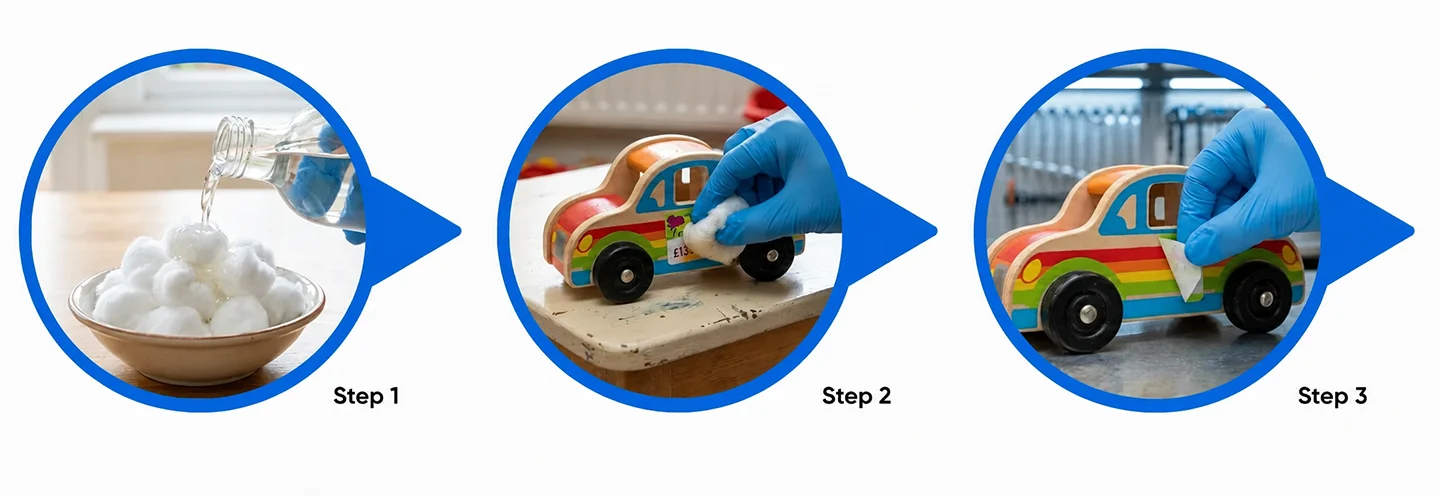
Execution Steps:
-
Wet a towel with white vinegar.
-
Wrap it around the sticker and leave it for 5 to 10 minutes.
-
Then lift the towel and remove the sticker with your fingers or the edge of a plastic card.
-
Wash it with warm water to remove excessive oiliness and dry with a clean cloth.
Required Time: 5 to 10 Minutes
Effectiveness Rating: ⭐⭐⭐⭐⭐ (5/5)
Ideal Surfaces: Glass Jars, Windows, Metal Containers, Food-Contact Items
Hair Dryer / Heat Activation Method (Zero Chemical Mess)
It is the cleanest way to remove a sticker without making a mess. Heat melts the sticky, tacky base of the sticker, which makes it easier to peel.
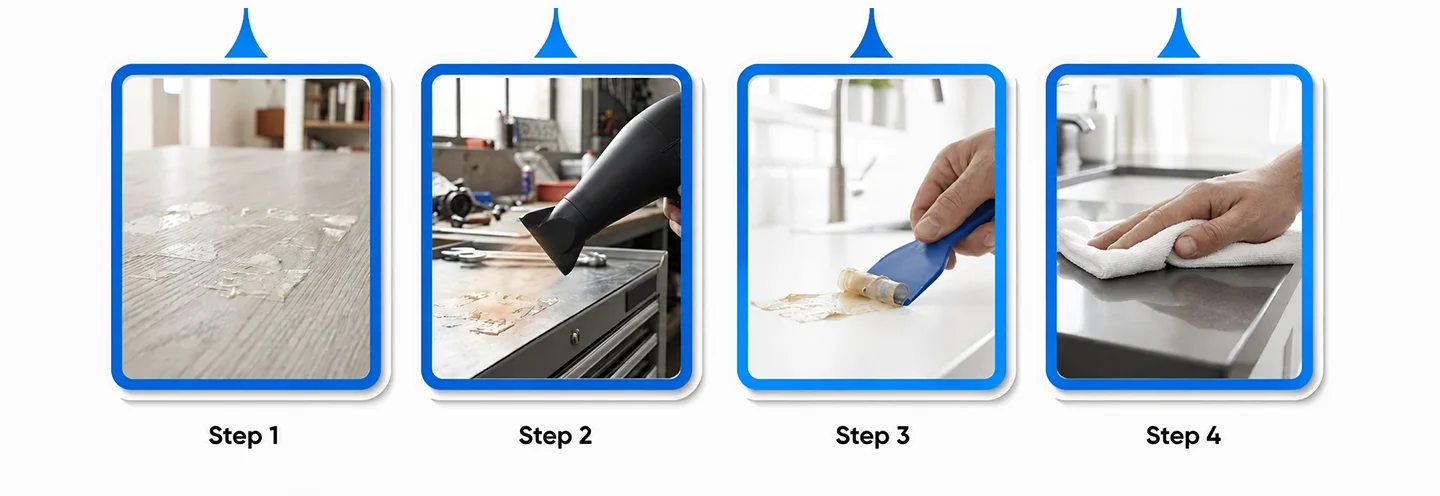
Execution Steps:
-
Turn your dryer on and set it to low or medium speed.
-
The nozzle of the dryer should be 3 to 4 inches away from the sticker.
-
Heat the sticker evenly for 30 to 60 seconds.
-
Test a corner using your finger; it should come off in one sheet.
Required Time: 2 to 3 Minutes
Effectiveness Rating: ⭐⭐⭐⭐☆ (4/5)
Ideal Surfaces: Paper Boxes, Cardboard, Coated Packaging, Glass, Car Windows
Warning: Avoid direct heat on Mylar bags & pouches because heat can deform their shape permanently.
Natural Kitchen Oils (Olive, Coconut, or Vegetable Oil)
Oil can soften many types of adhesives; these oils help stickers release their grip from the surface.
Execution Steps:
-
Put a few drops of oil on the residue.
-
Spread it all over the residue and leave it for 10 to 15 minutes.
-
Wipe it using a clean sponge or cloth.
-
Wash the surface with mild dish soap to remove the stickiness of oil from the surface.
Required Time: 10 to 15 Minutes
Effectiveness Rating: ⭐⭐⭐⭐☆ (4/5)
Ideal Surfaces: Plastics, Polished Wood, Glossy Coated Boxes
Baking Soda & Oil Scrub Paste (Abrasive Powerhouse)
If you are dealing with an old age and sun baked sticker, you need something more effective. Combining baking soda with oil can create a paste that will help you remove these kinds of stickers.
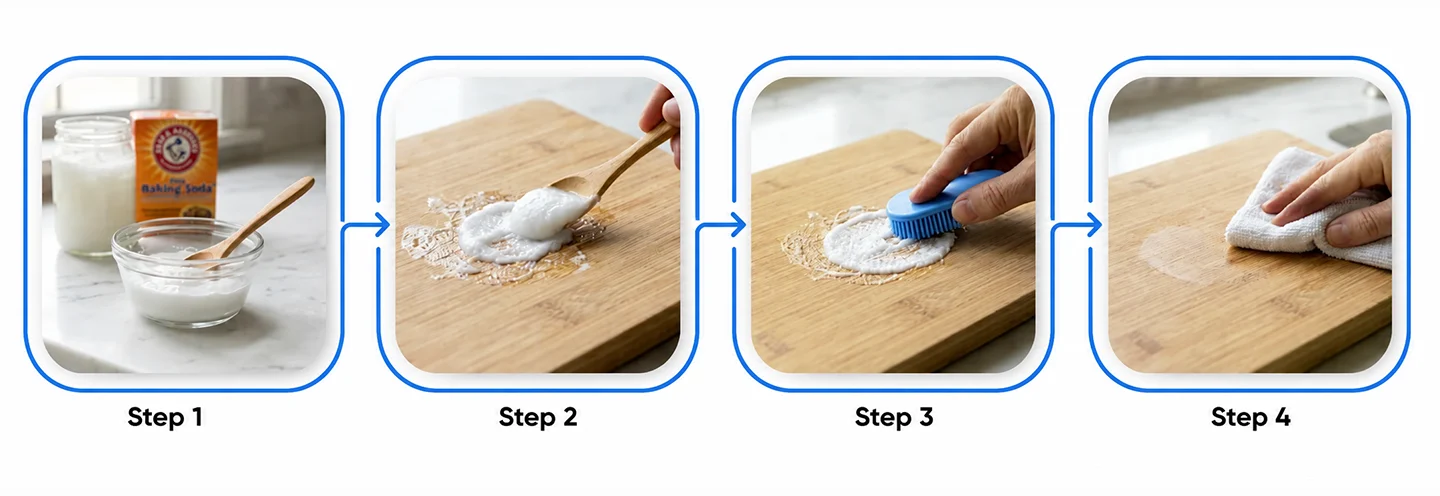
Execution Steps:
-
To form a thick paste, combine baking soda and oil equally.
-
Coat the area from which you want to remove the sticker with paste.
-
Let it rest for 10 to 12 minutes.
-
Wipe the area with a soft brush or cloth.
-
Then wipe it with a warm or damp cloth.
Required Time: 10 to 15 Minutes
Effectiveness Rating: ⭐⭐⭐⭐☆ (4/5)
Ideal Surfaces: Durable Hard Plastic, Metals, Unfinished Wood, Countertops
Note: If you want to remove residue from printed packaging, try to use less moisture and, first of all, test the method on the corner before applying it to the whole surface.
The Peanut Butter Method (Thick Natural Solvents)
Peanut butter helps remove stubborn glue residues. The thick texture helps it stay on curved surfaces where liquids cannot stay.
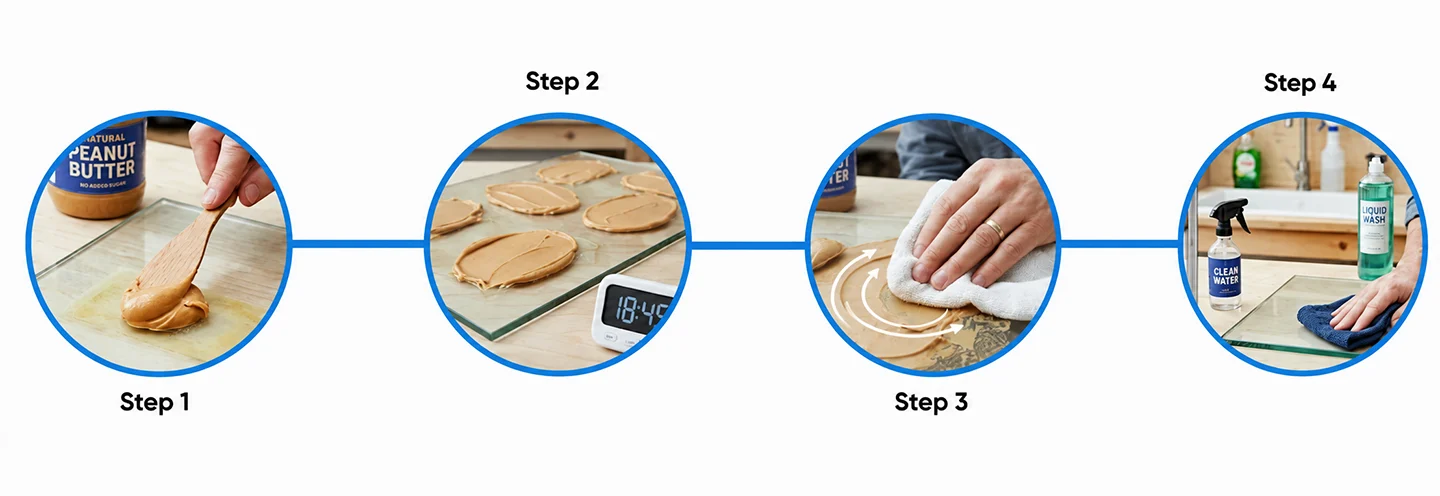
Execution Steps:
-
Apply a layer of peanut butter (not a chunky one) over the sticker residue.
-
Leave it for 15 to 30 minutes.
-
Wipe the peanut butter with a paper towel.
-
Clean it with warm water afterwards to remove the oily texture from the surface.
Required Time: 15 to 30 Minutes
Effectiveness Rating: ⭐⭐⭐☆☆ (3/5)
Ideal Surfaces: Glass Jars, Rigid Outdoor Plastics
Tip: Use creamy peanut butter instead of crunchy. Avoid using it on absorbent material because oil can leave a stain that is harder to come off than the original sticker.
Commercial Adhesive Removers (Goo Gone, WD-40, 3M)
The purpose-built adhesive removers are used for old and stubborn stickers that are difficult to remove. They are specially made to remove sticky residue and perform better than all household solutions.
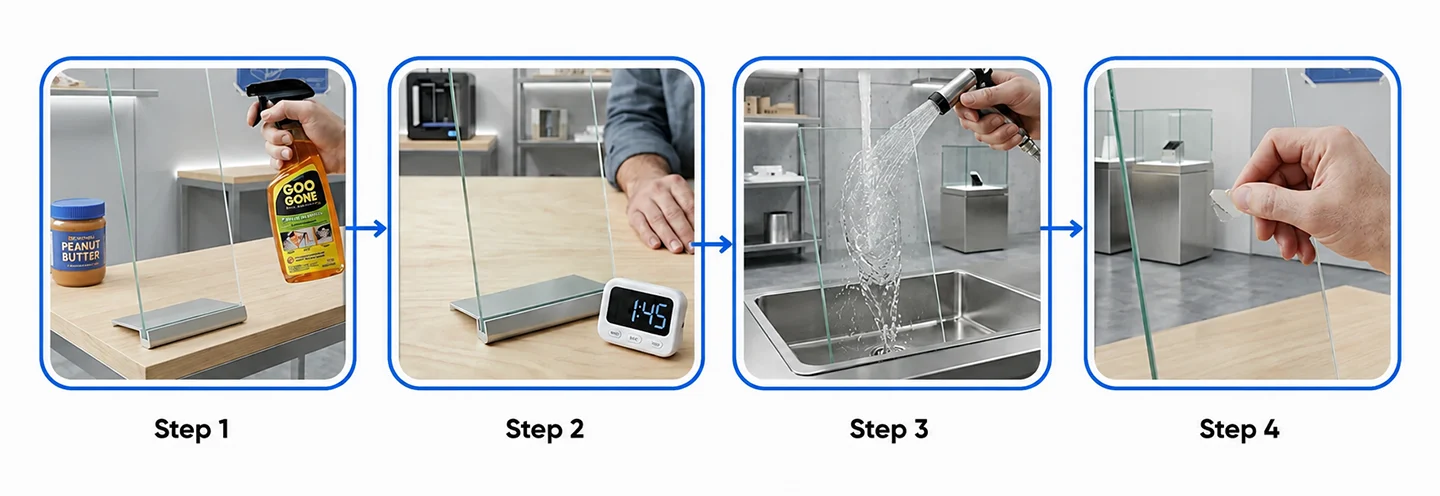
Execution Steps:
-
Apply a small amount to the surface.
-
Leave it for around 3 minutes.
-
Wipe or gently lift the adhesive.
-
Clean the surface with a warm cloth or soap and water.
Required Time: 3 to 10 Minutes
Effectiveness Rating: ⭐⭐⭐⭐⭐ (5/5)
Ideal Surfaces: Heavy Metal, Glass, Auto Body Finishes, Machinery
Magic Eraser (The Quick Surface Cleaner)
Light and moderate residue can be removed from different surfaces by using a magic eraser (like Mr. Clean Magic Eraser). It cleans the leftover stickiness from the surface. And you need to use it cautiously because harsh rubbing can leave bad effects on surfaces, like scratches.
Execution Steps:
-
Wet the eraser with water.
-
Squeeze out all the excess water.
-
Gently rub the sticky area in a circular motion until the residue starts to lift.
-
Wipe the surface with a clean, damp cloth to remove remaining grease.
Required Time: 1 to 5 Minutes
Effectiveness Rating: ⭐⭐⭐⭐☆ (4/5)
Ideal Surfaces: Glass, Stainless Steel, Ceramic, Durable Hard Plastics
Surface-Specific Rules to Prevent Damage
If you use the wrong method without understanding, it can lead you to buy a new one. Not every method can remove residue from different surfaces. Follow these rules to keep your products safe:
How to Remove Sticker Residue from Glass Jars & Windows
-
Best Methods: Isopropyl alcohol, white vinegar, razor blade scrapers, and Goo Gone.
-
What to Avoid: Don't use Harsh steel wool or wire brushes that scratch glass coatings.
-
Pro Tip: Soak the glass jar in warm, soapy water for some time, like half an hour or 20 minutes. Most probably, the sticker will come off as it is without using any method or will leave only light adhesive, which can be easily removed by using alcohol.
How to Remove Sticker Residue from Plastics & Acrylics
-
Best Methods: Cooking oils, baking soda paste, and warm dish soap.
-
What to Avoid: Acetone (Nail Polish Remover) or Goo Gone.
-
Crucial Warning: Heat and acetone can ruin the whole shape of your product because they melt the plastic. So try not to use these methods specifically on plastic.
How to Clean Residue off Laptops & Delicate Electronics
-
Best Methods: High-percentage isopropyl alcohol (90%+), hair dryer on low heat, microfiber cloth.
-
What to Avoid: Liquid drenching, soaking rags, or harsh petroleum sprays near ports and keyboard seams.
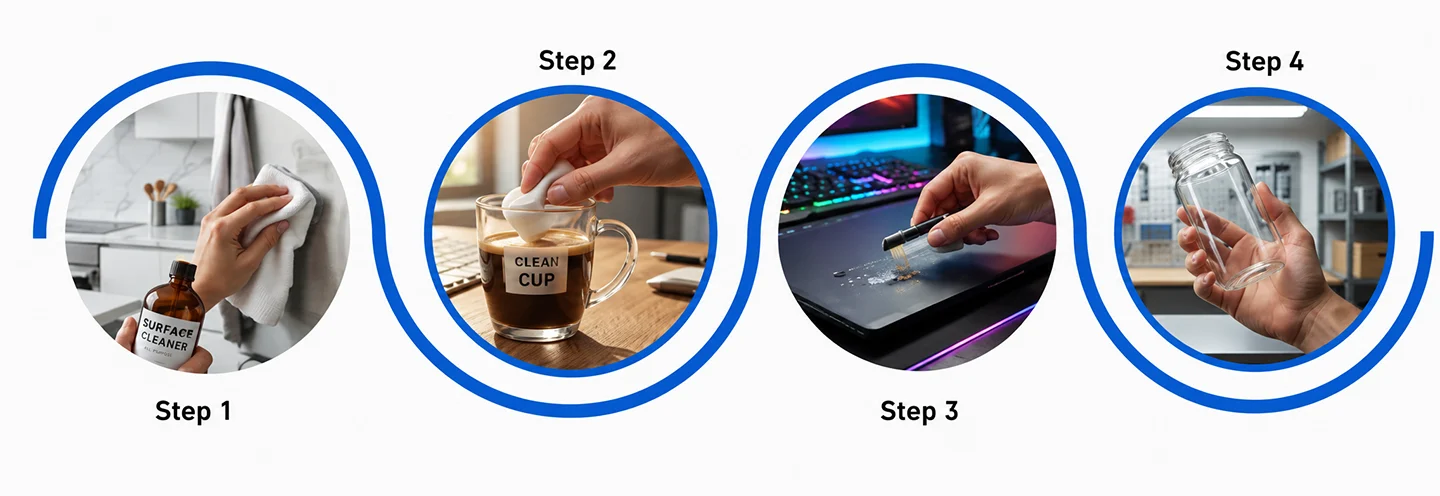
Pro Tip: You can never even think about spraying or pouring alcohol directly on electronics. Soak a cloth in alcohol and then remove the sticker according to the instructions.
How to Remove Residue from Cardboard Boxes & Paper Packaging
Best Methods: Hair Dryer (Heat), White Rubber Pencil Eraser.
What to Avoid: While removing shipping labels from cardboard, avoid liquid cleaners, oils, or wet soaking, as they can warp the cardboard fibers.
Any liquid cleaners, oils, or wet soaking that warp cardboard fibers.
Pro Tip: Use a rubber eraser to remove the residue or tape without tearing the paper surface.
How to Handle Wood, Finished Furniture, and Floors
-
Best Methods: Mineral Oil, Olive Oil, Gentle Diluted Vinegar.
-
What to Avoid: Heavy water soaking, acetone, or abrasive scrubbers that strip varnish, stain wood, or lift protective sealants.
What Should You Never Do When Removing Sticker Residue?
It is also important to know what things to avoid while removing sticker residue. Our detailed guide will help you answer all your queries.
Do not start with a knife
Sharp metal tools can leave scratches on plastic and paint. Use your fingers or a plastic scraper to remove the sticker residue instead of metal tools.
Do not soak cardboard
Water can destroy the whole material, warp the box, or damage the printed artwork or inks.
Do not use maximum heat immediately
Do not use heat on the plastic surfaces because it can change the shape of the product and affect its appearance.
Do not pour cleaner directly onto electronics
Do not pour or spray liquid material directly on electronics; instead, soak a cloth in it and then do the whole procedure.
Do not ignore the spot test
Test the method on the corner before applying it on the whole surface because some methods can damage certain surfaces.
The Two-Step Method Often Works Better Than One Method
Sometimes choosing one method is not the answer to how to get rid of sticker residue. You can also combine different residue-removing methods together to have more potential results.
For example:
-
Heat + rubbing alcohol: You can heat the sticker to soften its back and then dissolve the remaining film.
-
Oil + dish soap: You can loosen the grip of the glue with oil and then remove the greasy layer with dish soap.
-
Warm water + plastic scraper: First of all, soften the paper and adhesive with warm water and then use a plastic scraper to remove it.
-
Vinegar + soft cloth: In this method, leave the vinegar on the surface for some time before scrubbing immediately.
If we weaken the adhesive first, it removes the residue very easily.
Tips to Prevent Sticker Residue in the First Place
You may not always control the label or sticker already on an item, but proper removal can reduce the amount of glue left behind.
-
Peel stickers slowly.
-
Do not rip the sticker away.
-
Use gentle heat before removing old stickers or barcode labels.
Choose the right adhesive for the intended use
A permanent adhesive can be used for long-term use, and for temporary use, removable adhesive should be used. This is especially important for brands that apply stickers to packaging, jars, or containers.
They should use easily removable adhesive. And LabelPouches has all the related options for you; they can help you choose the right adhesive that can be easily removed afterwards.
Tip: A custom label is not considered good only by the fact that it sticks well, but also if it removes easily; then it comes in good standing.
Final Thoughts
Removing stickers can be frustrating, but it is not a permanent problem that cannot be solved. The most important step is to identify the material and then run a spot test on it. Once you know what your material is and which method will be suitable, it will be just a piece of cake to remove the sticker residue.
After removing a sticker from a certain surface, you can reapply a sticker as well. Then make sure to choose the right sticker and adhesive according to your product