Custom Printed Garment Barcode Labels For Clothing And Laundry Brands
Have you ever been in a situation where you wanted to get more information about an article at any store? So you went to the front counter and got it scanned? That's where labels get scanned, and all the information is presented right in front of you, nice and neat.
They increase the ease of managing time and inventory, which is why the trend of barcode labels is growing continually.
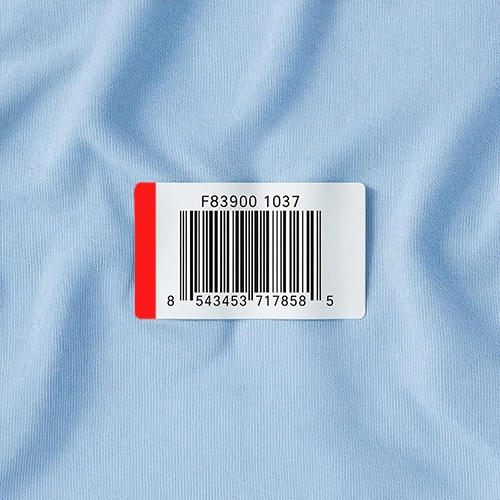
If you own a garment and clothing business or retail store that sells clothes and apparel, you need garment barcode labels. As per your real-time experience, you know how important it is to use a barcode label for a business. Having a barcode on each item provides accurate tracking, making daily business a lot easier, right? That is, of course, if it is being utilized for retail packaging, logistics, or storage.
There are quite a few companies out there, but what we offer at LabelPouches is unbeatable prices and exceptional quality to keep you all consistent, professional, and in control. This is exactly what every business that operates modernly can benefit from: use time wisely and reduce errors.
Any info given is a type of marketing that triggers the client to buy.
Evolution of Garment Barcode Labels
Ever thought, if there is no identification or record of the garment? How are you going to make your work with minimum or zero errors?
Or how would you know the inventory fluctuations?
Our solutions for garment labeling address the specific challenges and needs of industrial laundry and textile management. Whether applied to uniforms or specialty fabrics, our labels will endure in demanding environments.
- Labels built for industrial laundry & dry cleaning.
- Custom-made labels include pre-printed or print-on-demand.
- Label printers and software are available for management.
- Suitable for nylon, polyester, cotton, and other fabric blends.
Types of Garment Barcode Labels
There are various types of labels that are discussed below!
Synthetic Paper Barcode Labels
Paper labels for garments are a reasonable and functional approach, commonly used in general applications. They are suggested for indoor conditions and wherever durability and water resistance are not a factor. Paper labels have several finishes and print well, making them appropriate for branding and descriptions on a product.
Polyester Barcode Labels
Polyester labels are exceptionally strong and resist abrasive conditions, tearing, and extreme chemicals. They perform in high-temperature conditions and can be used in industrial, electronic, or automotive applications. They have longer durability, and a much larger volume of printed information remains legible for much longer.
Polypropylene (BOPP) Barcode Labels
Polypropylene labels, otherwise known as BOPP labels, are extremely durable, resistant to water, oil, and chemicals. Thereby, these labels can be used for garment products that may get wet, like garments or personal care items. They have glossy or matte finishes that enhance and deliver quality to products.
Thermal Heat-seal Barcode Labels
Thermal barcode labels are not printed with ink, but instead rely on heat. They will typically be used for printing on-demand or variable information in retail and logistics markets. These barcode labels are inexpensive and best for short-term use. Because they can fade when exposed to heat or sunlight.
They have two major types, such as
-
Tacky-back Heat Seal Barcode Label: They have stickiness prior to attachment to the garment.
- Standard Heat Seal Barcode Label: They are non-adhesive, washable, and dry-clean safe.
Fabric Barcode Labels
Fabric or textile labels are primarily used in clothing and textiles for branding, size, or care instructions. The labels are manufactured from cotton, satin, or polyester. Fabric barcode labels are flexible, soft, and hold up well over time.
Hang Tag Barcode Labels
Hang tags are generally used in the fashion or retail industry to inform consumers of details, pricing, branding, or care directions. Hang tags are often made from heavier materials like cardstock, kraft paper, or plastic, and are usually tied or pinned to the product itself.
Vinyl Barcode Labels
A strong adhesive adheres to almost anything. Cost-effective barcode labels will help you save money. They are removable polyester labels that stick permanently, but peel cleanly. They are tamper-evident labels. Also displays a VOID pattern when attempts are made to lift off the label.
Types of Retail Barcodes
Garment barcode options are available as both simple 1D codes to scan for a point of sale, or more advanced 2D codes and RFID. The best barcode type for your business depends on your desired uses, such as monitoring inventory, engaging customers, and durability.
Standard Retail Barcodes (1D)
The linear barcode is the traditional type of barcode and consists of parallel lines in various widths to represent a product identifier.
UPC (Universal Product Code)
UPC is the most used barcode format for retail products in North America. A 12-digit number identifies the manufacturer and product.
EAN-13 (European Article Number)
It is the international equivalent of the UPC, and it has 13 digits. It is globally compatible and suitable for international brands.
Code 128
CODE 128 is a high-density barcode that represents a combination of numeric and uppercase alphanumeric characters with a maximum of 48 digits. It is ideal for internal tracking and logistics or tracking items in a supply chain.
Enhanced and Interactive Barcodes (2D)
Two-dimensional barcodes encode data using a geometric pattern in any horizontal or vertical direction that allows the storage of more substantial information compared to linear codes.
QR Codes (Quick Response Codes)
Two-dimensional barcodes that can be scanned by any smartphone camera and are most commonly used as a bridge between the consumer and additional content.
GS1 Digital Link (QR)
A new standard using QR that will (eventually) replace the traditional UPC barcodes within retail. The use of a QR code means that it is available for the cashier to scan and the consumer to scan using their phone.
State-of-the-Art Tracking Tech
For large-scale operations with real-time visibility of inventory, RFID can be a much better alternative to optical barcodes.
RFID (Radio Frequency Identification) Tags
RFID tags use radio waves to send data wirelessly and are read in bulk and out of direct sight. Ideally, they are used for inventory, counting the amount of stock in real-time, loss prevention, and automated checkouts.
Why Are Garment Barcodes Labels Important?
A garment barcode label is important because it ensures accurate product identification, product pricing, and inventory control. All the way from the manufacturer to consumers. The barcode label improves efficiency in the management of garments for manufacturers, retailers, and customers by reducing errors. Speeding up the sales and logistics process, and ensuring consistency of products and brands.
Uniquely Identify Each Label For The Product
Barcode labels provide a unique identity for each label, allowing for the distinct identification and differentiation of one product from another. Each label can always be correctly identified whenever items are handled or sold, improving recognition accuracy. As a result, confusion and mix-ups are completely eliminated.
Manage Inventory Effortlessly
Barcode label usage makes managing inventory, storage, and stock levels more efficient and accurate. Each label can be scanned for an immediate update to its inventory level while reducing chances for human error. Updating stock levels maintains supply chain integrity from production to delivery.
Speed Up, Scanning, and Billing At POS
Barcode labels enable a simple process of quickly and accurately billing at the point of sale. Products can simply be scanned without the need to input every detail of an individual item. This facilitates a quicker, more efficient process all-around for better business and better customer experience.
Retain Traceability of Each Label In The Supply Chain
Using barcode labels for production and supply traceability for each product. The data is created every time a label is scanned, allowing tracking to show which product was in which batch and captures all movement data to allow traceability. Barcoding allows for accountability and transparency, and quality control for the entire production run and distribution (out on storage or retail) or during a winter presale season.
Common Types of Garment Barcode Label By Material
| Garment Barcode Labels: Types, Descriptions, and Uses |
| Label Type (by Material) |
Description |
Common Uses in Garments |
Barcode Compatibility |
Typical Printing Method |
| Paper Label |
Made of coated or uncoated paper; inexpensive and easy to print. |
Hang tags, price tags, temporary tracking labels. |
Good for short-term use (UPC, EAN, Code 128). |
Thermal transfer, direct thermal, and offset printing. |
| Thermal Transfer Label |
Synthetic or paper label printed with ribbon and heat. |
Shipping, carton, and warehouse labels. |
Smudge- and fade-resistant. |
Thermal transfer printer. |
| Direct Thermal Label |
Heat-sensitive paper label, no ribbon used. |
Short-term labels for logistics or packaging. |
Good, but fades with heat/light. |
Direct thermal printer. |
| Fabric (Woven or Satin) Label |
Made of woven polyester, nylon, or satin fabric. |
Care labels, brand labels, internal tracking. |
Good (Code 128, DataMatrix, QR). |
Thermal transfer or inkjet on fabric. |
| Tyvek Label |
Made from high-density polyethylene fibers (tear-resistant). |
Durable garment labels for washing or export. |
Durable for scanning. |
Thermal transfer, digital. |
| Polyester (PET) Label |
Durable synthetic label resistant to moisture and abrasion. |
Long-lasting tracking, industrial uniforms. |
Clear barcode readability. |
Thermal transfer, laser. |
| Satin Label |
Shiny, smooth fabric for premium brands. |
Brand and care labels inside garments. |
Good. |
Thermal transfer, foil stamping. |
| Nylon Label |
Flexible and smooth, used for care or size labels. |
Sewn-in barcode care labels. |
Good; holds the print well. |
Thermal transfer. |
| PVC / Vinyl Label |
Plastic, waterproof labels for rugged or outdoor wear. |
Workwear, rainwear, industrial garments. |
Excellent; resistant to moisture and chemicals. |
Screen printing, digital. |
| Heat Transfer Label |
Label design (including barcode) is transferred directly to the fabric with heat. |
Tagless garments, sportswear, inner labels. |
Barcode must be printed in high contrast. |
Heat press transfer. |
Types of Garment Barcode Labels
| Garment Barcode Label Types and Uses |
| Garment Barcode Label Type |
Common Symbology |
Main Use |
Label Material / Placement |
Example |
| Hang Tag Barcode Label |
EAN-13, UPC-A |
Product identification and retail sales scanning. |
Printed on paperboard hang tag attached to the garment. |
Brand tag with price and size. |
| Price / Size Label |
EAN-13, Code 128 |
Displays price, size, color, and SKU for POS. |
Adhesive paper or thermal label on the tag or polybag. |
“M, Blue, $20.99” barcode sticker. |
| Internal Care Label with Barcode |
Code 128, DataMatrix |
Tracks garments during production or QC. |
Satin/polyester fabric sewn inside the garment. |
Barcode near washing instructions. |
| PO / Style Tracking Label |
Code 128, QR Code |
Tracks purchase orders, styles, and production lots. |
Adhesive label or hang tag. |
“PO #, Style #, Color #” barcode. |
| Retailer Compliance Label |
GS1-128, UPC-A |
Meets retailer’s barcode standards and format. |
Paper or synthetic label, depending on the buyer’s spec. |
Required label format for Walmart, H&M, etc. |
| QR Code Marketing Tag |
QR Code |
Links to brand website, sustainability info, etc. |
Printed on a hang tag or a woven label. |
“Scan for fabric details” QR tag. |
Designing Process: Design The Perfect Garment Barcode Labels
Let’s dig deeper and understand the whole process.
Step 1: Design
You will begin the design process with a proper, beautiful layout using either professional label design software or packaging design software. The same label can be designed in 3 shapes: circle, square, or rectangular. This step in the process is only about branding, colors, text, and barcoding to an optimal, comfortable, legible configuration of all product information on the label. A tidy design will enhance the look of the label and compel the reader the understand the necessary product information.
Step 2: Barcode Generation
With the design finalized, barcodes will be generated automatically through the internal SKU, batch number, or tracking code from the ERP system of the company. Each label will have a unique barcode that the reader can scan. An important consideration is to eliminate duplicate or data entry errors. The correct generation of the barcode code will help develop an effective inventory code with minimal mistakes while also integrating smoothly into the retail floor or warehouse as part of the overall channel strategy of the company to distribute products.
Step 3: Printing
In the final step, the approved design will be printed on high-quality, adhesive label paper or plastic film. The most common methods include thermal transfer, flexographic, or digital printing. In this step, the goal is to produce a durable, smudge-proof, professional barcode label that maintains the fidelity of the label through handling and storage.
Why Choose LabelPouches?
Label pouches are a valuable and flexible packaging solution that combines protection, organization, and professional exhibition all in one. They assist businesses in keeping a proper identification of goods as they incorporate barcode labeling, allowing for the easy tracking of business operations and inventory. By using label pouches, businesses have fewer packaging mistakes, processing is much faster, and while also provide the brand with a boost in visibility. Our barcode label sheets and barcode label rolls are made with high-quality manufacturing materials. They enhance the value of your product.
Environmental-friendly Choices
We make garment barcode labels with eco-friendly materials. Brands can choose biodegradable or recyclable options.
Free Shipping Throughout The USA
We offer free shipping on all garment barcode labels across the USA to your doorstep. Whether you are a fashion manufacturer, exporter, or retailer, shipping directly to clients.
Customization To Fit Your Garment and Clothing Brand
Every label we manufacture can be customized to represent your garment brand. From dimensions and shapes to logo printing positions and color schemes, we can help you create attractive branded packaging labels.
Glossy or Matte Finishes
You may choose your garment label finish to be glossy for a shiny, vibrant bubble or matte for smooth, understated elegance. Both finishes are durable, scratch-resistant, and shield the barcode label from being unreadable during garment handling and retailing.
Truly Durable and Inventive Materials
Durable and lightweight materials, such as polypropylene and PET films. These are perfect, as they keep the garment barcode label protected from dust, moisture, and ripping, while remaining lightweight.
By opting for Label Pouches = Labeled and standard ensured implementation.
At Labelpouches, we do more than just provide garment labels. We provide wholesale prices with extraordinary quality. We provide according to the demand for your product. We have various types of labels that can be customized on demand.
Contact Us and Get An Instant Quote
Label pouches can be used across many industries: retail, logistics, and manufacturing. In fact, it is a modern way of displaying their products and maintaining usable consistency. Inventory control is just another way to package product plans.
For an instant quote, please don't hesitate to contact us.
Frequently Asked Questions
1. What is a garment barcode label?
A garment barcode label is a tag or sticker that is affixed to clothing. The garment barcode label includes a barcode that can be scanned and contains relevant information about the product, including size, color, style number, price, and SKU, which makes it easy to identify the product.
2. Why are barcode labels important to a garment?
A barcode label assists with inventory management, pricing accuracy, and expedited checkout. It enables retailers and manufacturers to track garments from production through warehousing and then to the sales process, minimizing the issues of errors and time.
3. What barcodes are used on garment labels?
The most commonly used barcode formats for garment labels are EAN-13, UPC-A, or Code 128 for normal tracking. QR codes are often incorporated for additional information or care instructions, website links, etc. This will depend on the retail system in place and the region.
4. What information is included on a garment barcode label?
A standard garment barcode label would include the brand name, style code, size, color, price, and a barcode number. Labels may also indicate country of origin, fabric composition, or cleaning instructions.
5. What materials are used for garment barcode labels?
Garment barcode labels can be made from satin, polyester, paper, or adhesive thermal materials, based on the intended use. Woven and printed labels will be used for longevity; paper
6. Can I use QR codes on garment barcode labels?
Yes, QR codes are very common. They can link customers to product details, size guides, and care instructions online as well. Having QR codes improves transparency and increases customer engagement and brand experience.